Warehouse Automation
Automate or Lease More Space? Comparing Robotics to the Cost of a Bigger Building
Nov 12, 2026 · 14 min read · Robotech Pros
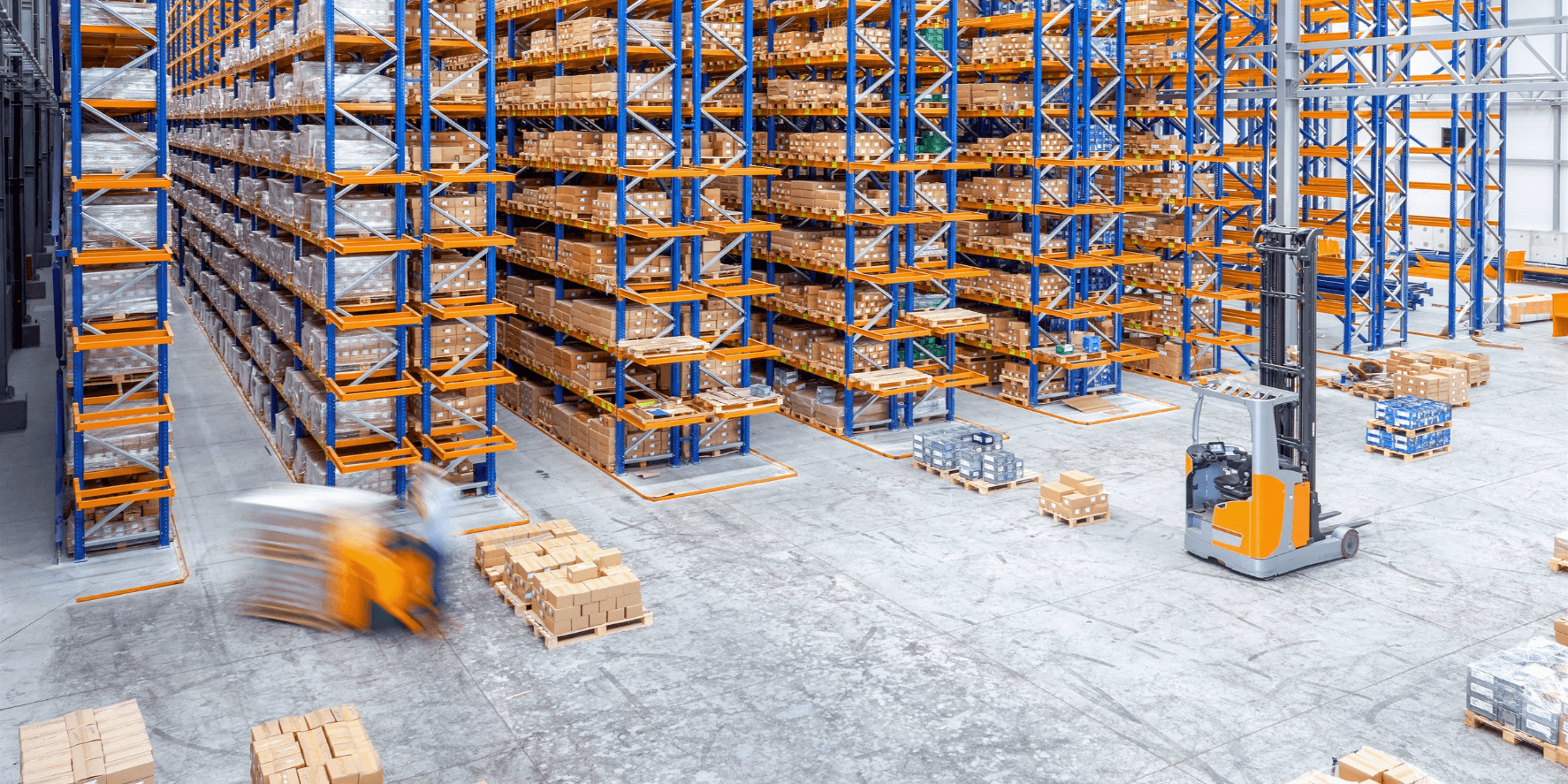
Running out of space and running out of floor area are not the same problem. This guide puts a larger building and a density project on the same basis, with the arithmetic behind each and an honest account of when a leas
Automate or Lease More Space? Comparing Robotics to the Cost of a Bigger Building
Every growing operation reaches the same meeting. Inventory is up, staging has crept into the pick aisles, and somebody puts a listing for the building down the street on the table. The question sounds like a real estate question, so it gets answered with real estate math. It is rarely a real estate question. Limited physical warehouse space was the most cited supply chain challenge among respondents to the 2026 Intralogistics Robotics Survey, ahead of both labor cost and labor availability. It is the most common reason operations look at automation, and the reason they most often buy the wrong thing.
Why running out of space is usually a density problem
A building sells floor area. A density project sells cubic feet and hours. The two are only substitutes if floor area is what is actually binding, and in a facility with twelve foot aisles and six feet of air above the top beam, it usually is not. The test is not how full the place looks at eye level. It is how much height sits unused above your top load, and how much floor is given over to aisle rather than storage. Both are free to measure and take an afternoon.
The two options also fail in different places. More floor area does nothing for picker travel, and a larger building makes travel worse. A density project does nothing for clear height, and no amount of capital adds roof.
Table 1: Which constraint are you actually solving
| What is actually binding | Does more floor area fix it? | Does a density project fix it? | How to tell in one shift |
|---|---|---|---|
| Pallet positions, with height unused above the racking | Partly, and you rent all of it | Yes, the core case | Measure top of load to the lowest roof obstruction |
| Pallet positions, racking already at the roof | Yes | No, height cannot be added | Same measurement, no usable gap left |
| Picker travel per order | No, a bigger building lengthens it | Yes, this is what mobile robotics converts | Time the walk separately from the pick |
| Volume that exists a few weeks a year | Yes, short term space flexes | Rarely, capital does not flex | Compare peak weeks against the other forty |
| Clear height below what the equipment needs | Yes | No | Compare clear height to the stated requirement |
Two of these five point at real estate. The other three do not.
What a bigger building actually buys you
It buys floor area, immediately, with a known monthly number. That is a real advantage. A lease can be signed in weeks and occupied in months, which no capital project can match.
The cost is harder to see, because base rent is the smallest honest version of it. Taxes, insurance, and common area charges are billed on top and are not fixed. Racking, lighting, dock equipment, and the system changes to run a second location arrive before the first pallet does. A second site also carries its own staffing floor whether it is busy or not, since a supervisor and a shift lead are step costs rather than linear ones. Splitting one catalog across two buildings raises total safety stock as well, an effect formalized in inventory theory as the square root law. The magnitude is debated; the direction is not.
The market is not making any of this cheaper. CBRE put US industrial vacancy at 6.4 percent in the third quarter of 2026, down year over year, with quarterly net absorption of 104.6 million square feet, the highest since late 2022. JLL recorded national asking rents rising 3.2 percent year over year, the fastest pace since the second quarter of 2024. There is no credible public figure for the average US industrial lease term, so we will not invent one. Use your own term and escalator, and note that both compound.
There is a second trap in the listing itself: cheap space is usually old space. CBRE counts over three billion square feet of bulk warehouse built before 2000 with clear heights under thirty feet, the figure it treats as the modern minimum, and vacancy there has nearly doubled in two years to 8.0 percent. The affordable building and the building that fits a modern operation are often not the same building.
What recovered space actually buys you
Two things, worth separating. Positions, recovered by narrowing aisles and going higher. And throughput, recovered by taking travel out of the picking day, where it has long been estimated to consume around half of order picking time.
The aisle arithmetic is the part most teams have never run, and it needs no vendor. A pallet position occupies floor for the rack plus a share of the aisle beside it. Narrow the aisle and that share falls, with no change to the pallet or the roof.
Table 2: What aisle width does to storage density
| Aisle convention | Aisle width | Module width | Positions per 1,000 sq ft per rack level | Floor area for 10,000 positions at 4 levels |
|---|---|---|---|---|
| Wide aisle, counterbalanced forklift | 12 ft | 19 ft | 23.4 | 106,900 sq ft |
| Narrow aisle, reach truck | 9 ft | 16 ft | 27.8 | 90,000 sq ft |
| One-way lane, pallet handling mobile robot | 6.5 ft | 13.5 ft | 32.9 | 75,900 sq ft |
| Very narrow aisle, guided equipment | 6 ft | 13 ft | 34.2 | 73,100 sq ft |
Derived from published aisle conventions and Rack Manufacturers Institute load clearances, not from a vendor claim. Assumes 48 by 40 inch pallets at a 4.5 foot pitch and 3.5 foot rack rows on both sides of the aisle. Excludes cross aisles, dock, and staging.
The last column is the comparison. Holding the same 10,000 pallet positions, the difference between a twelve foot aisle and a six foot aisle is roughly 33,000 square feet of building. For many operations that is the entire size of the second lease they were about to sign.
The robot row is worth sitting with. A pallet handling autonomous mobile robot with a published chassis width of 50.5 inches requires a 78 inch minimum one-way aisle. A counterbalanced forklift moving the same pallet needs roughly twice that. The vehicle is not faster and does not lift higher. It needs less room to exist, and room is what you are short of.
Height is the cheaper lever, since each additional rack level adds a full plane of positions at no floor cost. Whether you can add one depends on clear height, rack capacity, and sprinkler design rather than on the robot, which is why racking, aisle widths, and mezzanines already limit what automation can do in a given building. Storage above twenty feet brings NFPA 13 flue space and in-rack sprinkler requirements into scope. That is not a reason to avoid it, only a reason to price it honestly.
Throughput is the second return, and it does not show up on a floor plan. Where travel is a large share of the picking day, goods-to-person systems convert it into throughput by bringing inventory to a fixed station. Where the pick face is already dense, there is far less to convert, which is the honest reason to compare goods-to-person against person-to-goods rather than assume the denser option wins.
Putting both options on the same basis
The two bills have different shapes, which is why the comparison usually gets made badly. Rent recurs, starts immediately, and scales with area. Automation is capital, arrives with a ramp, and scales with throughput rather than square feet. Setting a monthly rent figure against a purchase price tells you almost nothing.
A defensible comparison holds the outcome constant and prices both paths to it. Fix the capacity you need, in pallet positions and peak orders per hour, then cost each route to that number over the same horizon. The lines below go missing most often.
Table 3: The full cost of each route to the same capacity
| Cost line | Leasing additional space | A density project in the building you have | Most often left out |
|---|---|---|---|
| Recurring occupancy | Base rent on the added area, every year of the term | None, the floor is already paid for | Escalators compound across the term |
| Operating expenses | Taxes, insurance, and common area charges on the added area | Power, network, and maintenance on the equipment | Billed on top of base rent, and not fixed |
| Fit-out | Racking, lighting, dock equipment, WMS zones for a second site | Rack changes, guidance or charging, integration | Rack changes can trigger a structural review |
| Labor | A second site carries its own staffing floor regardless of volume | Headcount per shift falls, technical skill rises | Staffing a second site is a step cost, not a linear one |
| Inventory | Safety stock rises when the same items sit in two places | Unchanged | The square root law gives the rough magnitude |
| Time to benefit | Weeks to months | Months to years | 47 percent of survey respondents expect over two years to operation |
Rent is deliberately left blank. Market rent varies too widely to publish a useful figure, and your own number is the only one that belongs here.
Run it over the horizon that matches the decision, not a convenient one. If the lease under discussion runs five years, five years is the window, and a capital project judged over three will lose a fight it should have won. Our guide to calculating automation ROI covers the discipline on the capital side.
Where leasing is still the right answer
Often enough that it is worth saying plainly, even though we sell the other thing. A project that disqualifies itself in a planning meeting costs a conversation. One that disqualifies itself after the equipment lands costs a capital budget.
Lease when the racking is already at the roof. Lease when the requirement is a few weeks of peak, because labor flexes into that and capital does not. Lease when the constraint is dock doors or yard, since no density project adds a door. And lease when the facility horizon is shorter than the project horizon, which deserves more weight than it gets: the average US warehouse is over forty years old, and a large share of deployments take more than two years to reach operation.
The soundest answer is often neither alone. A smaller second space for slow-moving or seasonal stock, paired with a density project on the fast half of the catalog, frequently costs less than either route by itself and carries less risk.
What to measure before you sign either
Four numbers decide this, and none need a vendor. The unused gap between your top load and the lowest roof obstruction. Your current aisle width against the width your equipment actually requires. Travel as a share of the picking day, timed separately from picking. And peak orders per hour against the average, which says whether you are sizing for a real load or for eight weeks in the fourth quarter.
With those four figures the comparison stops being a matter of opinion. Without them it defaults to whichever option already has a number attached, which is almost always the lease.
Robotech Pros works on brownfield facilities, so the starting question is what the building you already have can be made to do. If you are approaching a lease event or a capacity decision, a workflow assessment covering cube, aisle geometry, and travel will show which of the two bills you are actually looking at. Where the answer is not obvious, a proof-of-concept program tests the density assumption on your own inventory before capital is committed.
Related resources
What Is Physical AI, and What Does It Change on the Warehouse Floor?
Physical AI is the name for robots that learn to sense, decide, and act instead of only following fixed rules. This guide explains what the term means, where it already changes warehouse work, and what is still unproven.

Warehouse Automation KPIs: What to Measure Once the Robots Are Running
A deployed fleet produces a great deal of data and surprisingly little information. These are the metrics that tell you whether the robots are healthy, doing the right work, and paying for themselves.
When Not to Automate: Five Operations Where Robotics Is the Wrong Answer
Most automation content explains when to start. This one explains when to stop: five operating profiles where mobile robotics disappoints, with a measurement you can run before anyone quotes a fleet.